Historic Reno Preservation Society

Preserving Truckee Meadow's Past through Education, Advocacy, and Leadership

From Your HRPS President - Winter 2012 PDF Print E-mail

Perhaps you missed the story, since it happened at an abandoned location east of Reno.

A view of the historic Wadsworth school from the suspension bridge over the Truckee River. A view of the historic Wadsworth school from the suspension bridge over the Truckee River.

On September 10th, the 121-year-old Wadsworth School was destroyed by fire. For safety reasons, the fire officials decided to let the building burn. Now, a landmark that opened its doors in 1890 and served children from Wadsworth, Fernley and Nixon is no longer.

The loss of this structure struck me for two reasons. For one, just last spring I explored the area around the school. I took a pretty good photo of it, taken from the suspension bridge across the Truckee and it comes up periodically as a screen saver on my computer. Thanks to technology the old school will not be forgotten.

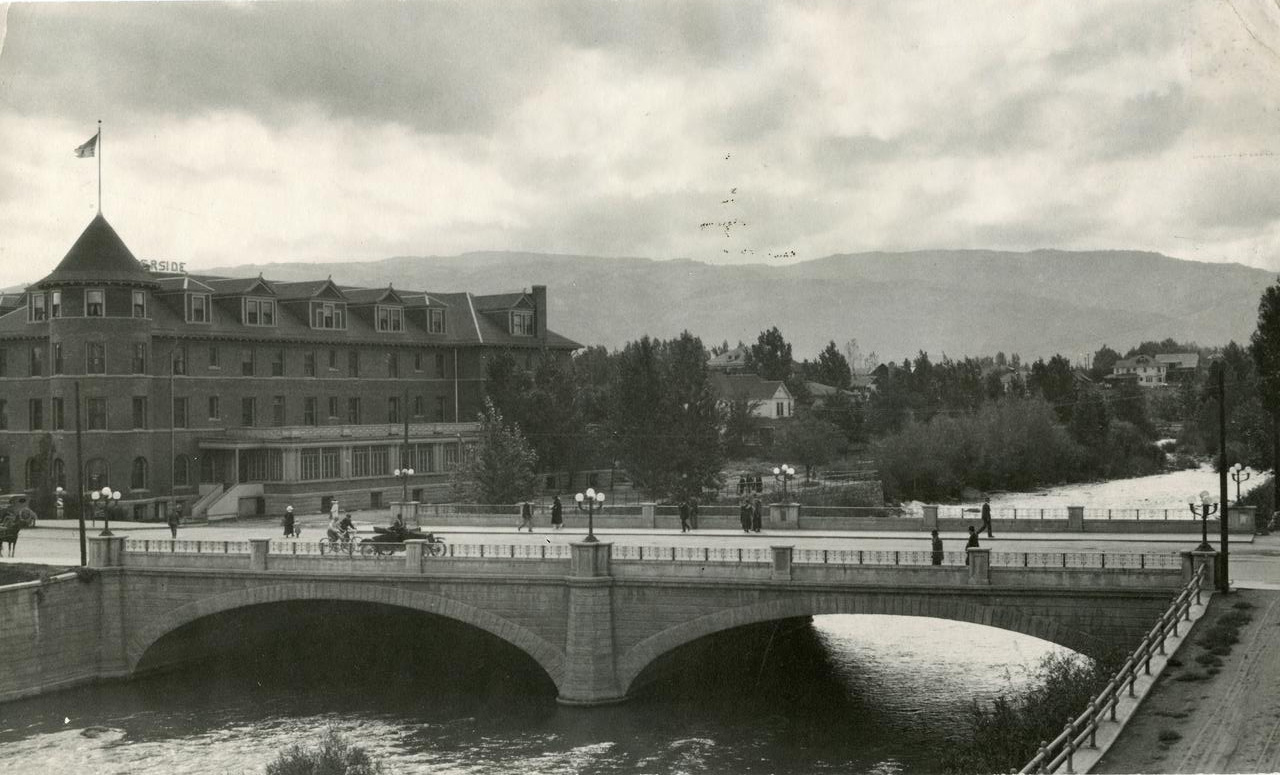
The other reason losing the Wadsworth School struck me was because it was another example of Nevada losing an iconic image. The loss echoed the impending demise of the Virginia Street Bridge. The fate of the Bridge has been on my mind for months. I write this column in November as the Reno City Council takes its final vote on the bridge design type that will replace the 106-year-old span that has represented Reno and its colorful history.

As I mentioned in the President’s Message in the last issue of FootPrints, the HRPS Board understood that there was no "winning" a battle to save the bridge. Working with certain engineering and hydraulic assumptions, it appeared that removal of the lovely arched bridge was unavoidable. The only solution widely endorsed is a "free span" that allows unobstructed flow under the bridge in high water times. Not all recommended free span bridges are equal, however, and we supported the two "grade" (street) level options that reduced the impact on the historic River Corridor, especially the equally iconic Riverside Hotel. We sent letters and spoke publicly in support of these grade level bridge types.

Recently, we had several members encourage us to fight for the old bridge. The HRPS Board discussed this and decided, although with regret, not to participate. There just is no winning on this battle. Various community organizations, business leaders, stakeholders, in fact most citizens...all endorse any solution that will eliminate flooding downtown. The new bridge design has become a panacea for this problem. Even our members, with a handful of exceptions, have been silent on this issue. Without a groundswell or constituency to save the bridge, the effort is doomed before it starts. There are still many aspects of the flood project that need to be clarified. There are significant questions about when and how any bridge choice will be constructed. Money is an ongoing problem. Changes to the "locally preferred plan" for flood management compounds the issues further.

We will continue to monitor the situation and provide input when useful. If and when the engineering stage moves on to the next phase, in which aesthetic and historic elements are incorporated into the design, HRPS will do all that we can to promote a safe bridge that evokes the beauty of the historic one. Fortunately, we have a recognized seat at the design table.

Reno is not the only community struggling with preserving its landmark structures. Gregory Paul Williams, a historian commenting on why the Hollywood sign has become such an important image, said "L.A. is a place that has not saved a lot of old places, the sign becomes iconographic."

Once the Virginia Street Bridge is gone, I wonder where Reno will find its next icon? Let us see what we can do to preserve it before it, too, is gone.

Sharon Honig-Bear